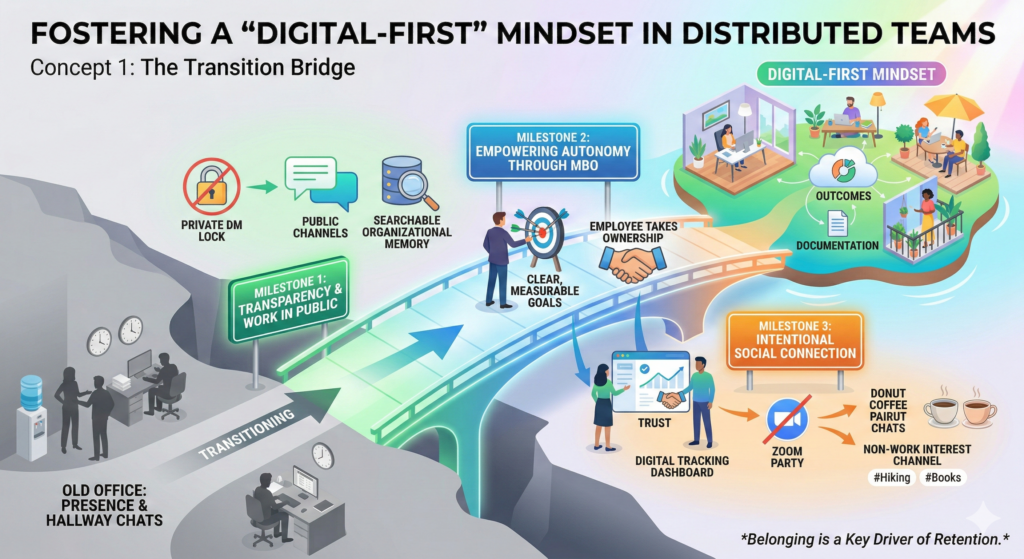
Transitioning to a distributed model requires more than just high-speed internet; it requires a fundamental shift in organizational psychology. A digital-first mindset prioritizes outcomes over presence and documentation over “hallway chats.”
Transparency and “Work in Public”
A digital-first culture thrives on transparency. Encourage teams to move conversations out of private DMs and into public channels. This creates a searchable “organizational memory” that allows any team member to catch up on a project’s context without needing a briefing. When information is accessible by default, you eliminate the bottlenecks that typically plague remote work.Empowering Autonomy through MBO
In a distributed environment, “micro-management” is a recipe for burnout. Leaders must shift to Management by Objectives (MBO). By defining clear, measurable goals and providing the digital tools to track them, you empower employees to own their schedules. This trust is the bedrock of a digital-first culture; it shifts the focus from “who is at their desk” to “what value is being created.”Intentional Social Connection
Without a physical water cooler, social bonds can fray. Digital-first teams must be intentional about building community. This doesn’t mean “mandatory fun” Zoom happy hours. Instead, use tools that facilitate organic interaction—like “donut” chats for random coffee pairings or dedicated channels for non-work interests. In 2026, a sense of belonging is a key driver of retention in the global talent market.